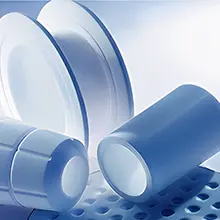
Standard PTFE is globally recognized for its near-zero friction and exceptional non-stick surface. However, these identical properties make it impossible to glue or bond using industrial adhesives. Sodium Etched PTFE Sheets solve this challenge through a specialized surface-modification process.
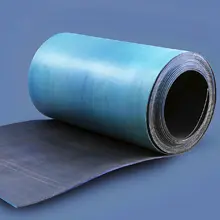
By treating the material with a high-performance chemical solution, the molecular structure of the surface layer is altered, turning it a distinctive dark brown tone. This process drastically increases the surface energy of the sheet without compromising its core properties. The resulting etched surface allows high-strength industrial adhesives, epoxies, and polyurethanes to form a permanent, structural bond with metals, rubbers, plastics, and other substrates.
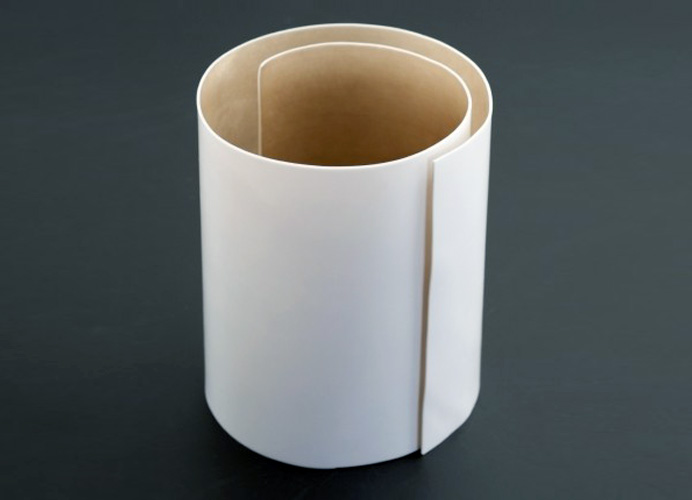
At Hindustan Nylons, we manufacture high-grade Sodium Etched PTFE Sheets engineered to deliver exceptional structural bondability while retaining total core chemical inertness, making them the ideal choice for demanding chemical processing, lining, and high-performance industrial applications.
The chemically modified surface layer allows for aggressive adhesion, ensuring the PTFE sheet remains permanently fixed to its backing material under heavy mechanical stress.
While the microscopic etched layer is optimized for bonding, the unetched core retains total resistance to aggressive acids, harsh bases, and volatile solvents.
The untreated side preserves the ultra-low friction coefficient inherent to virgin PTFE, preventing material buildup and reducing mechanical drag.
The material maintains its physical integrity and performance across a vast operational temperature spectrum, enduring both extreme cryogenic conditions and high-heat environments.
Completely immune to aging, cracking, or weathering caused by long-term ultraviolet (UV) exposure, moisture, or atmospheric elements.
The unetched bulk polymer serves as a superior electrical insulator, preventing electrical grounding and current leakage in demanding assemblies.
The distinct dark brown color change of the treated side provides immediate visual confirmation of the bonding surface, ensuring error-free installation during production.
The typical bond strength of sodium-etched PTFE to substrates like metals using structural adhesives is 30–40 kgf/cm² in lap shear, while direct tensile pull-off or normal tensile bond strength generally ranges around 40–50 kgf/cm². The adhesive joint performs significantly better under parallel shear forces than under perpendicular tension or peel.
At Hindustan Nylons, we manufacture high-grade Sodium Etched PTFE Sheets engineered with precision surface treatment to enable superior bonding strength with adhesives, all while maintaining the unmatched temperature resistance and ultra-low friction properties of virgin PTFE.
Follow the step-by-step fitment procedure below to ensure maximum bond strength and long-term service reliability:
The Sodium Etched PTFE Sheet / Liner is chemically treated on one side and supplied ready for adhering to a correctly prepared metallic surface.
Machining: The metal surface can be prepared using standard machining methods like Grinding, Milling, Shaping, Planing, Scraping, or Polishing to achieve an ultimate surface roughness between Ra = 1.6 to 6 µm.
Filling Defect Areas: Any depressions, dents, or pores on the metallic surface should be filled with epoxy-based adhesives and polished flat.
Cleaning: The metallic surface as well as the etched liner surface should be cleaned using approved cleaning agents only.
Caution: Petrol, Diesel, or Kerosene should NOT be used as cleaning agents.
Recommended Adhesives: ARALDITE AW 106 / HV 953 IN or Loctite EA E30 HV.
Spreading Direction: Apply the structural adhesive uniformly to both the metallic surface and the pretreated (etched/dark brown) side of the PTFE liner. Take due care to spread the adhesive on the metallic surface in a longitudinal direction (perpendicular to the sliding direction), while applying it on the etched PTFE liner in a transverse direction (parallel to the sliding direction).
Adhesive Consumption: Approximately 0.200 kg per sq. m.
Expose the coated metallic surface and etched PTFE liner to air for a few minutes to accelerate initial curing. Carefully place the PTFE liner onto the metallic surface starting from one end, then slowly roll/press toward the other end to prevent air entrapment.
During curing, apply a constant, uniform clamping pressure of 200 gm/cm² for 48 hours.
After complete curing, the fitted Sodium Etched PTFE Liner can be finished using conventional finishing mediums like Grindstones or Polish Papers, if necessary.
The optimal performance of the Sodium Etched PTFE bonding system is heavily dependent on the bond strength between the metallic surface and the liner. Any deviation regarding the points below can result in poor bonding and lead to premature failure of the total system:
At Hindustan Nylons, our Sodium Etched PTFE Sheets are precision-engineered to serve as superior anti-friction linings, structural slide bearings, and corrosion-resistant vessel linings, enabling seamless, high-strength adhesion to metallic and composite substrates across extreme operating environments.
Hindustan Nylons supplies high-grade Sodium Etched PTFE solutions tailored for demanding sectors where uncompromised material integrity and long-term bond reliability are critical.
Hindustan Nylons manufactures PTFE Sheets in Moulded as well as Skived Formats in a variety of standard sizes tailored for versatile industrial applications:
| Parameter | Standard Available Specifications |
|---|---|
| Manufacturing Formats | Moulded Sheets & Skived Sheets |
| Standard Widths | 900mm, 1000mm, 1200mm, and 1500mm |
| Standard Thicknesses | 0.25 mm, 0.5 mm, 0.75 mm, 1.0 mm, 1.25 mm, 1.5 mm, 2.0 mm, 3.0 mm, 4.0 mm, 5.0 mm, 6.0 mm, and 8.0 mm |
* Sodium Etched PTFE Sheets can also be supplied in Custom Widths & Thicknesses, subject to Minimum Order Quantity (MOQ).
PTFE Sheets with one-side sodium etching are manufactured by Hindustan Nylons across a comprehensive range of base and filled grades:
* Note: Custom or non-standard filler compositions in chemically treated PTFE Sheets can also be produced based on client specifications (Subject to MOQ).
Thanks for your interest!
If you have an inquiry, you've come to the right place
feel free to
call us: +91 937-3056560
or
email us contact@h-n.co.in